
Building Samoa’s epidemiology workforce from within
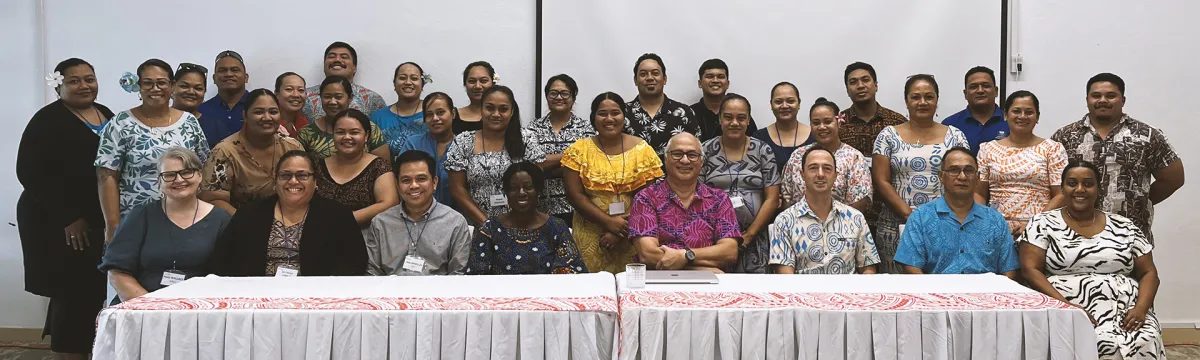
When 24 health professionals gathered at a hotel in Apia, Samoa, for the Postgraduate Certificate in Field Epidemiology (PGCFE), they weren’t stepping away from their roles in the national health system—they were beginning a process to strengthen them.
The PGCFE is part of a broader regional effort to build sustainable surveillance and response capacity through field epidemiology training. Supported by the Pacific Evidence for Informed Policies and Programs Plus (Pac-EVIPP+) team at ANU, the five-module, workplace-based program is delivered in-country to build a skilled workforce capable of detecting, analysing and responding to public health threats.
By delivering the training locally, the project avoided the workforce gaps that often accompany overseas study. “The local delivery is very important—we all benefit from being able to apply skills we learned immediately,” reflected participant Dr John Wesley Tuioti-Mariner.
Over months, doctors, clinicians, medical scientists, laboratory technicians, and public health officers adopted a “for work, at work” approach to capacity building. Beginning with epidemiology fundamentals, they progressively advanced into more technical and practical areas, including outbreak investigation, health information systems, and Hospital Information System management.
Working with Fiji National University, The Pacific Community (SPC), and the World Health Organization (WHO), the Pac-EVIPP+ team tailored delivery, mentorship and applied projects to Samoa’s specific health priorities.
The development of Standard Operating Procedures and electronic tracking tools for typhoid surveillance, for example, provides practical improvements to local disease monitoring.
By the final module, 12 participants completed and presented their projects in front of senior staff from the Samoa Ministry of Health, reinforcing the relevance and quality of the work produced.
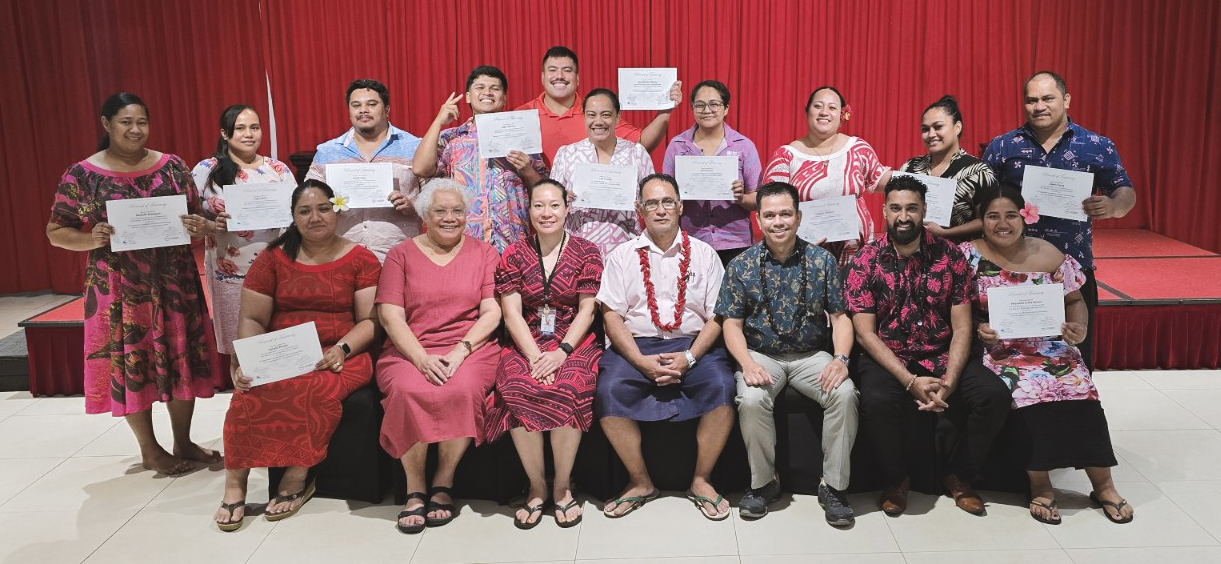
Those who managed to complete the program said the experience was transformative and rewarding. Many reported increased confidence in conducting investigations, interpreting data and reporting findings.
Facilitators observed significant professional growth over the months of training. Yet the most compelling endorsement came from the participants themselves, who advocated for the program’s expansion.
“I wish there were additional modules to train more staff and strengthen systems,” remarked participant Fiaalii Siuta, who is a Surveillance Officer with the Ministry of Health, Samoa.
The cohort also valued the culturally responsive mentorship and peer learning. Beyond technical competencies, the program fostered a great rapport and a strong sense of collective responsibility.
In co-facilitating PGCFE in Samoa, Pac-EVIPP+ has demonstrated that targeted, collaborative investment as such can translate into stronger systems and a more confident health workforce.
These outcomes resonate beyond a single cohort or country. Funded through the Australian Government Department of Foreign Affairs and Trade, Pac-EVIPP+ works to strengthen applied epidemiology capacity across Pacific Island countries including Samoa, Fiji, Kiribati, Nauru, Niue, Solomon Islands, Tonga, Tuvalu and Vanuatu—as well as Cambodia and Laos in Southeast Asia. By building regional capability through sustained partnerships and accredited training pathways, the program contributes to a more secure and self-reliant public health landscape.
“What we’re trying to do is cultivate a skilled and resilient community for applied field epidemiology across the regions,” said Dr Rosalina Sa’aga-Banuve, leader of the Pac-EVIPP+ team. “The idea is to equip the local team so well that we are not needed.”