
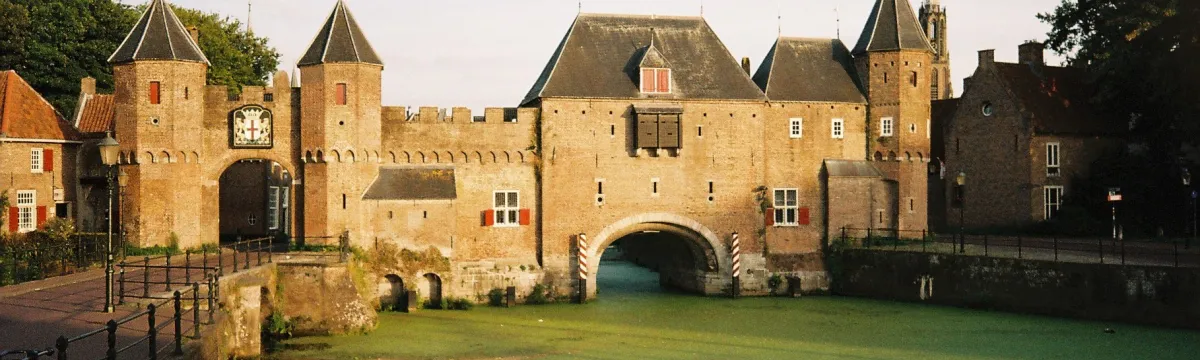
Castles, canals, and coding: A European summer with the Baume Travel Grant
This Baume HDR Travel Grant Trip Report is written by PhD Candidate Daisy Wang at the Department of Applied Epidemiology. Daisy's research focuses on the epidemiology of tuberculosis (TB) and using whole genome sequencing for public health surveillance.
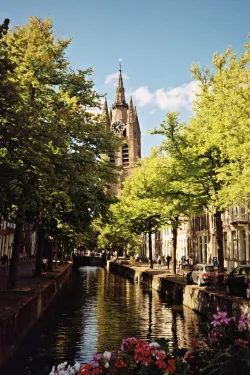
In 2025, I was privileged to be awarded the NCEPH Baume HDR Travel Grant, which took me across the globe to Europe. Cycling along the Dutch canals, past medieval gates, pastry shops, and quaint towns in the Netherlands was a pinch-me moment I’ll never forget.
From the outset of my PhD, I knew I wanted to find an opportunity to do an overseas internship—I was keen to learn about applied research in an international context, collaborate with new teams, and further develop skills for my PhD and beyond. I was particularly drawn to Europe and the Netherlands for their high-quality research and extensive implementation of whole-genome sequencing. I reached out to potential organisations and was fortunate to hear back on a project that aligned strongly with my research goals.
I set up a three-month research internship with the National Institute for Public Health and the Environment (RIVM) in the Netherlands. There, I contributed to a project comparing two Whole Genome Sequencing technologies, Oxford Nanopore Technologies (ONT) Nanopore sequencing and Illumina sequencing, to better understand the epidemiology of tuberculosis (TB).
The internship was a fantastic opportunity to learn from global experts in a highly respected public health institute. I had the privilege of contributing to a project led by RIVM PhD student Noud Hermans, under the supervision of Richard Anthony (RIVM) and Kristin Kremer (KNCV Tuberculosis Foundation).
I began by shadowing the laboratory DNA preparation and sequencing before diving into the coding and analysis side. We are currently working on writing and publishing a paper from these findings, and the knowledge and skills from this experience will also be directly transferrable to my other PhD projects.
During my internship, I joined my RIVM research team in attending the 2025 European Society of Mycobacteriology in Lisbon, Portugal. I had the chance to meet international experts, hear about the latest developments in TB research, and presented two posters for discussion and feedback.
I also had the opportunity to visit KNCV Tuberculosis Foundation, an international non-profit organisation dedicated to ending TB and related health challenges, and the Utrecht municipal health service, where I gained insight into TB health services in the Netherlands.
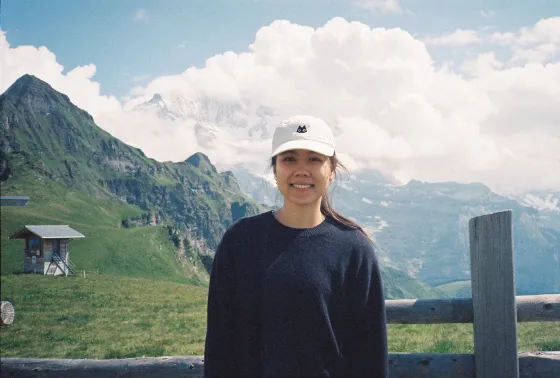
Between coding and conferences, I squeezed in as much travel as possible. This included cycling around windmills and canals in the Netherlands, exploring castles in Portugal, sampling croissants at colourful beach towns in Southern France, picturesque walks in the Swiss Alps, swimming in crystal blue waters in Croatia, and trying endless pastries and gelatos in every city.
I am endlessly grateful for the generosity of time, mentorship, and welcoming attitudes from everyone I met at the RIVM, KNCV, and the Utrecht municipal health service. The trip was made possible thanks to the support of the Baume Travel Grant, the Vice-Chancellor’s HDR Travel Grant, NCEPH HDR funds, and my primary supervisor, Martyn Kirk.
This was not only a valuable research opportunity, but a truly unforgettable life chapter. A PhD can be a challenging experience, but also comes with so many unique opportunities—I would encourage other PhD students to seek out and seize opportunities to make the most out of this journey!