From evidence to practice: Building better systems to support breastfeeding
Mothers are often made to feel personally responsible for breastfeeding, but making breastfeeding possible is a public health issue whose outcomes are heavily shaped by health systems.
As World Breastfeeding Week is marked from 1 to 7 August, NCEPH researchers are examining how data and evidence can help strengthen breastfeeding support and reduce gaps in access to care.
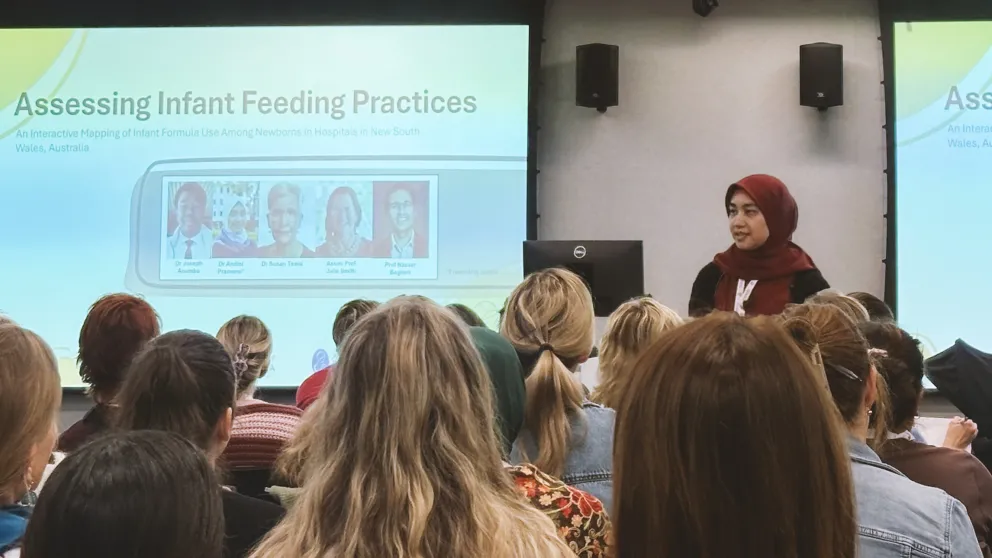
"Breastfeeding outcomes are shaped not only by individual choices, but also by the systems that support families during pregnancy, birth, and the early postnatal period," said Dr Andini Pramono, Research Fellow at NCEPH and an International Board-Certified Lactation Consultant (IBCLC).
One international approach to strengthening breastfeeding support is the Baby-Friendly Hospital Initiative (BFHI), launched by the World Health Organization (WHO) and the United Nations Children's Fund (UNICEF). The initiative calls on maternity and newborn service facilities to implement a package of policies and procedures, known as the Ten Steps to Successful Breastfeeding, to support breastfeeding worldwide.
In a recent article, Dr Pramono and colleagues found that BFHI implementation is associated with reduced use of commercial milk formula, improved breastfeeding outcomes, and potential reductions in greenhouse gas emissions associated with formula production and use. The review also highlighted the importance of investing in breastfeeding support and workforce development.
In another study, Dr Pramono and collaborators used geospatial mapping and interactive dashboards to examine infant feeding practices across 46 hospitals in New South Wales.
They found that in BFHI-accredited hospitals, infant formula use was lower on average. They also identified geographic disparities in access to BFHI-accredited maternity services, particularly outside metropolitan areas.
“No woman should receive different levels of breastfeeding support because of where she gives birth, yet the concentration of BFHI-accredited hospitals in metropolitan areas highlights ongoing inequities in access to evidence-based care,” Dr Pramono said.
Dr Pramono presented the findings on the final day of this year’s World Breastfeeding Week at the Infant Nutrition and Nurture Across the Early Years (INNATE) Conference. The study demonstrates how data can help identify gaps, monitor progress, and inform strategies to strengthen breastfeeding support across health systems.
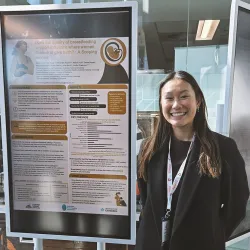
Related research supervised by Dr Pramono examined how women's experiences and expectations of breastfeeding support may influence decisions about place of birth. Medical student Ms Naomi Yong shared the findings at the same conference in a poster presentation.
To strengthen the evidence base around BFHI, Dr Pramono is taking part in studies designed to understand which features of breastfeeding-supportive maternity care women value most, and how these preferences influence decision-making about maternity services.
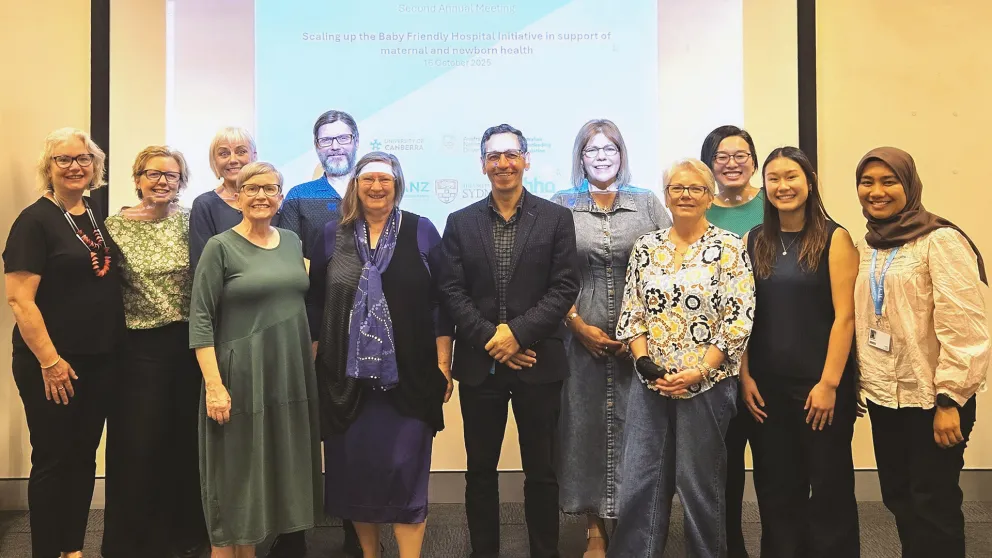
These studies form part of the Medical Research Future Fund (MRFF)-funded project Scaling up the Baby Friendly Hospital Initiative (BFHI).
Bringing together researchers from NCEPH, the University of Canberra and partner organisations across Australia and New Zealand, the project aims to investigate equity of access to BFHI-accredited maternity services, inform policies and practices that help more women achieve their breastfeeding goals, and ultimately improve maternal and newborn health outcomes.
"By measuring what works and identifying where gaps remain, we can help ensure that all families have access to high-quality breastfeeding support, regardless of where they live," says Dr Pramono.