
Promoting adaptive leadership to respond to public health threats in Pacific countries
Pacific Island and Southeast Asian countries continue to face significant public health threats.
From the intense HIV epidemic in Fiji to outbreaks of vaccine-preventable diseases in multiple countries, from the rise of climate-sensitive diseases to shifts in global health funding mechanisms, these emerging challenges emphasise the ongoing need for strong public health leadership informed by epidemiological evidence.
Funded by the Department of Foreign Affairs and Trade (DFAT) through the Regional Health Partnerships grants, the Pacific Evidence for Informed Policies and Programs Plus (Pac-EVIPP+) at ANU aims to link partners and programs across the Pacific and Southeast Asia regions for a strong and integrated applied epidemiology workforce.
Over the past year, the Pac-EVIPP+ team partnered with Ministries of Health in Solomon Islands and Nauru to co-deliver workshops focused on strengthening public health leadership.
Building on experiences from previous leadership sessions, these workshops incorporated outbreak scenarios and simulations on climate-sensitive and zoonotic diseases, alongside expanded content addressing climate change, One Health, and Gender Equality, Disability and Social Inclusion (GEDSI).
The workshops were designed to emphasise the role of adaptive leadership in public health crises and the critical importance of cross-sectoral collaboration in outbreak responses.
In Solomon Islands, 12 staff—including one participant from the Ministry of Agriculture—were trained in October 2025. Through a range of interactive activities, we facilitated discussions on communication skills and strengthened participants’ toolkits in time management, crisis leadership, negotiation and mentorship.
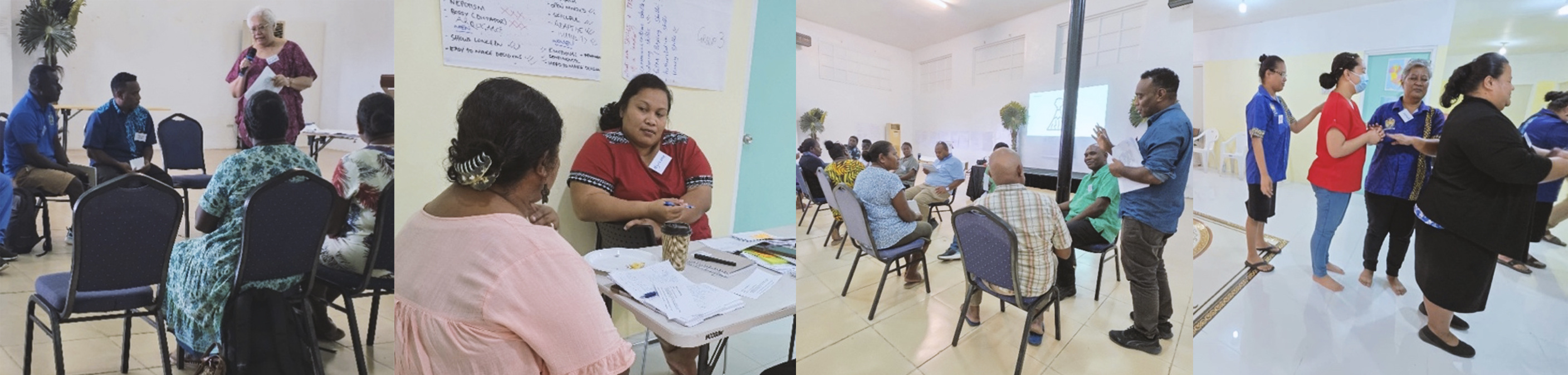
To encourage participants to consider the role of climate change in disease pathways, we used case studies to stimulate idea exchange and worked through public health responses informed by those scenarios. To prompt discussion on power dynamics and the role of gender and disability in decision-making, we engaged participants in a “survival canoe” role-play.
“The training was very practical and timely. The content is easy to follow, and I had a lot of fun these three days. One of the best workshops ever,” said a participant from the Solomon Islands workshop.
All participants in Solomon Islands articulated plans to apply their learning following the workshop. Over half (58%) indicated they plan to implement mentorship programs as a result.
In November, the second workshop was delivered to Nauru Ministry of Health staff, including both public health and clinical staff from the Republic of Nauru Hospital. In this workshop, we guided participants to develop skits that showcased workplace mentorship scenarios, prompting deeper reflection on the role of mentorship in professional development.
We also worked closely with local public health leaders to ensure the workshop content was contextually appropriate and co-facilitated sessions alongside them.
Across both workshops, participants valued the interactive format, and overall reception was highly positive.
“The group discussions opened my mind to new perspectives,” reflected a participant from the Nauru workshop. “I want to apply what I learned immediately to my work,” said another.
In the coming year, Pac-EVIPP+ looks forward to continuing delivery of these workshops across Pacific countries throughout 2026, strengthening public health leadership and enhancing responses to pandemics and other public health crises.