
News & events
News

Three NCEPH PhD students reflect on what happens when years of research must become a story that anyone can understand.

A COVID-era "couch epidemiologist" turned his curiosity into a career in public health. MAE scholar Zac Doan reflects on his journey from biomedical science to the WHO Western Pacific regional emergency response team.
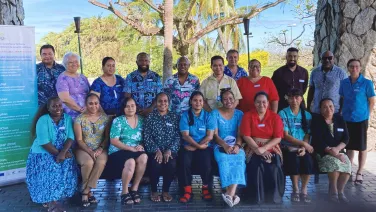
Nineteen Pacific health professionals have begun advanced epidemiology training—supported in part by the Australian National University’s Pac-EVIPP+ program—to strengthen local capacity for evidence-based public health practice across the region.

ANU epidemiologists argue that it’s time to retire the label ‘CALD’ in health demographics.

Across Cambodia and Lao PDR, the Pacific Evidence-Informed Policies and Programs+ (Pac-EVIPP+) team at the Australian National University (ANU) is working closely with partners to strengthen the field epidemiology workforce.

Over the past year, the Pac-EVIPP+ team from ANU has been supporting the Postgraduate Certificate in Field Epidemiology program to equip the Samoa field epidemiology workforce to address current and future public health challenges.
Events

Are you interested in applying for Australia's TEFINET-accredited field epidemiology training program? Join our information session on the Master of Philosophy in Applied Epidemiology and find out more.

PhD candidate Ashis Talukder demonstrates that addressing the double burden of malnutrition in South and Southeast Asia requires consistent measurement, integrated programme approaches, and effective governance.

Understanding the relationship between foodborne gastrointestinal infections and environmental risk factors in Timorese infants that may lead to subsequent child malnutrition and stunting.
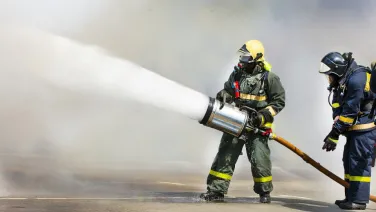
Learn about the current state of knowledge regarding PFAS on health and human exposure.
Are you interested in applying for Australia's TEFINET accredited field epidemiology training program? Join our information session on the Master of Philosophy in Applied Epidemiology and find out more.

Investigating the combined impact of household food insecurity and inadequate access to water, sanitation, and hygiene (WASH) facilities on the nutritional outcomes of children and anaemia status of mothers in coastal Bangladesh.

Examining the acceptability and impact of a school-based helminth education package in the Lower Mekong Basin.

This PhD thesis aims to explore the gaps in the TB and MDR-TB continuum of care in Zimbabwe.

This project aims to assess people's perceptions, knowledge, and health practices about non-communicable diseases (NCDs) using mixed methods.